
Whiteside County Court Records After a Jail Arrest
After an arrest by Sheriff John F. Booker's office or a local police department, a person may be booked into Whiteside County Jail. That booking is a jail and sheriff record. The separate court record begins when the Whiteside County State's Attorney decides what misdemeanor, felony, traffic, conservation, juvenile, tax, or asset-forfeiture matter to commence and prosecute. Once filed, the case is part of the 14th Judicial Circuit and is maintained by the Whiteside County Circuit Clerk.
The distinction matters because booking charges can be preliminary. A jail entry may describe why someone was brought to the facility, while court records after a jail arrest show the formal charge, docket activity, court dates, amendments, dispositions, and sentence if there is a conviction. For custody status and booking detail, use the jail inmate records path. For booking photographs, use the separate jail roster mugshots information. Court records answer the case-status question, not the current-jail-location question.
Clerk, Court, and Prosecutor Roles After an Arrest
The Whiteside County Circuit Clerk states that the office maintains traffic, civil, and criminal case records filed and heard in the county. Official copies, payment handling, and clerk file questions belong with that office, not with a third-party search page. The Illinois Courts directory lists the Whiteside County Courthouse at 200 East Knox Street, Morrison, IL 61270, with the Circuit Clerk phone at 815-772-5188. The county courts page also lists the Sterling Court Building at 101 E 3rd St, Sterling, IL 61081.
The Whiteside County State's Attorney is the prosecutor, not a district attorney. Colleen Buckwalter's office prosecutes criminal matters and provides legal advice to county agencies, including the Sheriff and Circuit Clerk. That office decides what charges to commence after a jail arrest, but the Circuit Clerk maintains the resulting court records and the court controls hearings, release terms, warrants, and dispositions.
The county's official Circuit Clerk page identifies the local office that maintains criminal case records: Whiteside County Circuit Clerk.
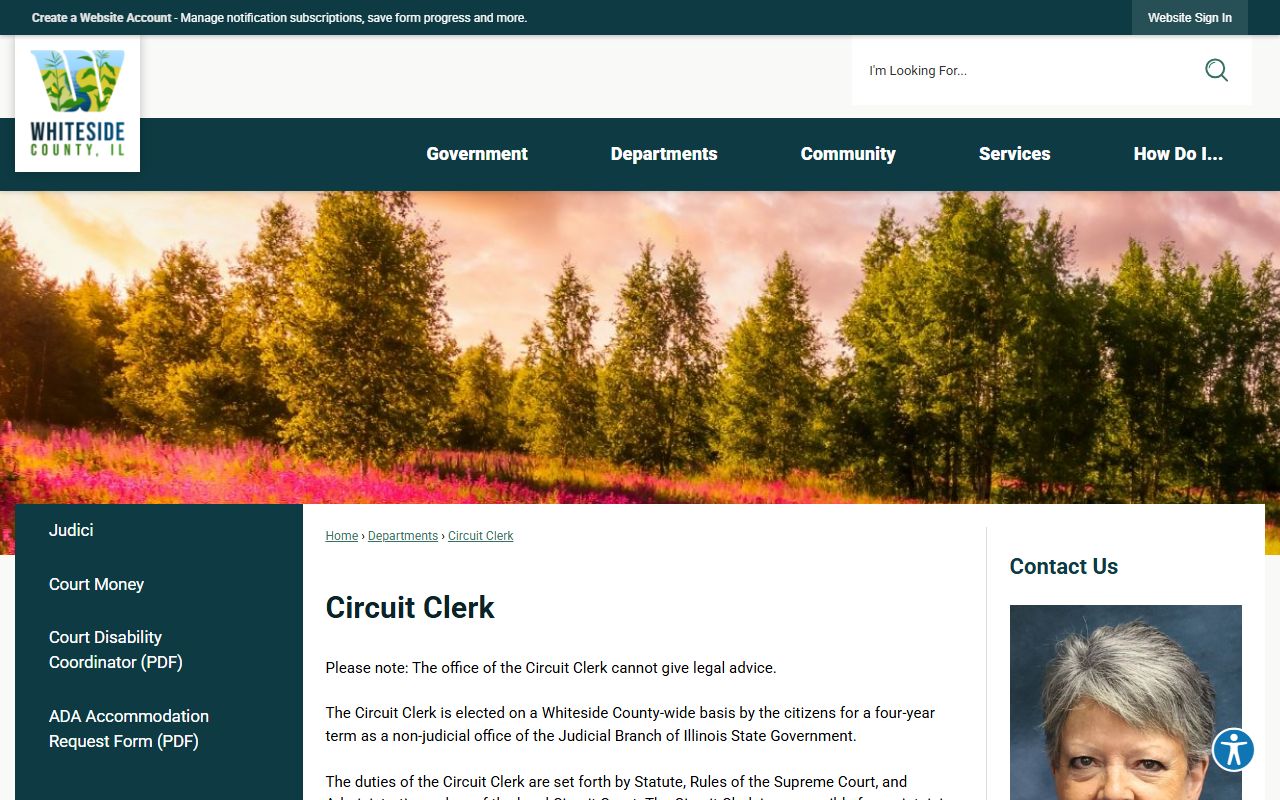
That source is more important than a generic criminal-record search because it identifies the office responsible for the county's actual criminal case file.
How to Find Whiteside County Court Records After an Arrest
Whiteside County's records page links Judici for court records. Judici is a county-linked case-search portal, but automated inspection of the Whiteside County search page encountered a humanity check, so field labels could not be fully verified from the captured environment. A person searching manually may still be able to pass the check and search public case information. Certified copies, complete file questions, and records that are not visible online should be handled through the Circuit Clerk.
- Open the county-linked Judici Whiteside County case search.
- Search by the defendant's name or a known case number if the portal allows those fields after human verification.
- Open the matching criminal or traffic case and read the charge list, docket events, court dates, and disposition entries.
- Compare each charge against the booking information because arrest charges and filed court charges can differ.
- Contact the Circuit Clerk at 815-772-5188 for official copies, file-access limits, or payment questions.
Illinois also has statewide court and criminal-history tools, but they serve different purposes. re:SearchIL is a statewide court-document portal with access controlled by court policy and case type. Illinois State Police criminal-history channels, including CHIRP and Access and Review, are separate from a Whiteside County docket search. ISP public conviction information under the Uniform Conviction Information Act is not the same as every local charge ever filed after an arrest.
| Search Channel | What It Covers | Field Notes | Limits |
|---|---|---|---|
| Judici Whiteside County | County-linked public case search for local court records | Fields were blocked by a humanity check during capture | Not the official clerk copy source and may require human verification |
| Circuit Clerk | Traffic, civil, and criminal case records filed and heard in Whiteside County | Request by name, case number, or case details when known | Office cannot provide legal advice |
| re:SearchIL | Statewide court document access for eligible case types and users | Access may require an account or qualifying role | Remote access rules do not make every circuit-court criminal file public online |
| Illinois State Police CHIRP | Name-based statewide criminal-history conviction information | Name-based inquiry through ISP systems | Conviction-history access differs from local docket research |
The county-linked case-search page is Judici for Whiteside County, but users may need to complete human verification before searching.
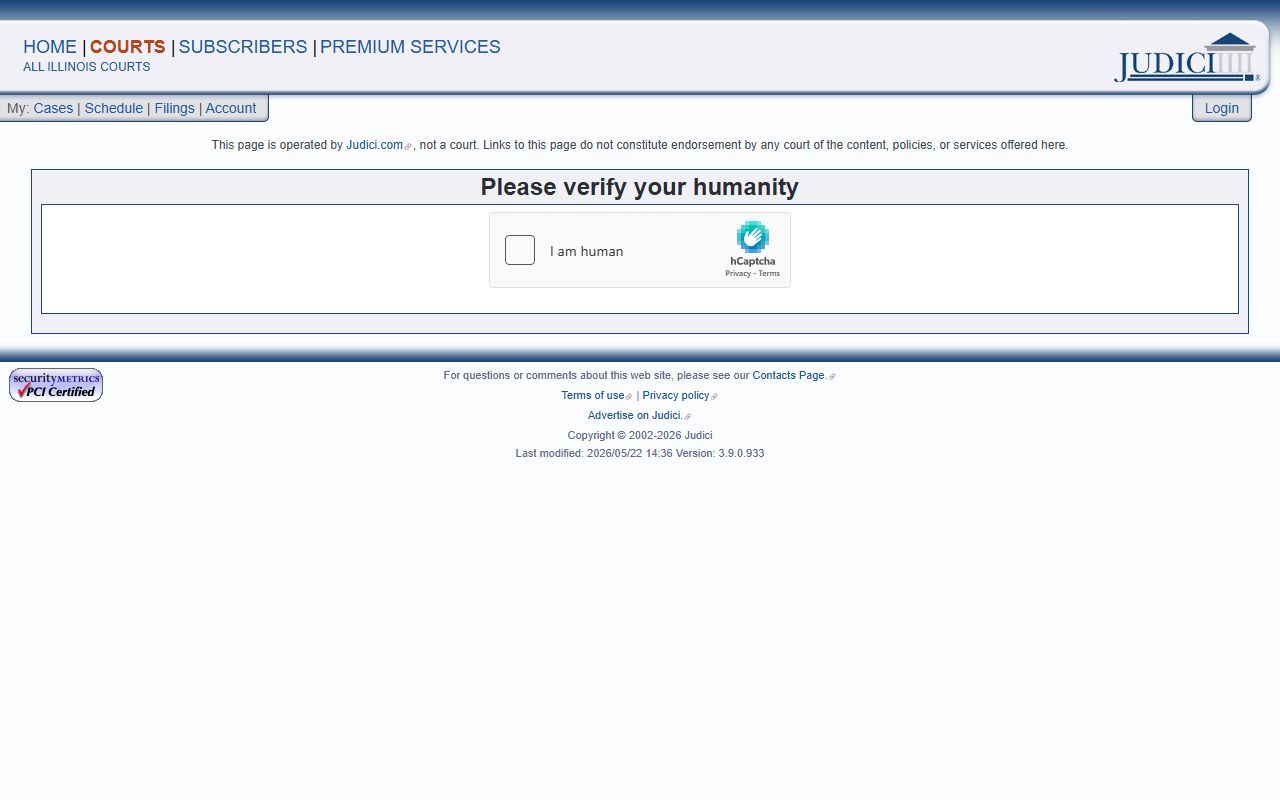
That access limit should be treated as a practical search issue, not as proof that no court records exist.
How Charges Get Filed After an Arrest: Complaint, Information, and Indictment
Booking at Whiteside County Jail is an intake event. A court charge begins with a formal charging document. The State's Attorney may file or proceed on the document that fits the case, and the court file then tracks what happens to each count. A complaint, information, or indictment can all appear in court records after an arrest, but each has a different role in how the accusation reaches the court.
| Document | Who Uses It | What It Means | Why It Matters |
|---|---|---|---|
| Complaint | Prosecutor or law enforcement | A formal written accusation used to open many criminal cases | Often explains the offense alleged at the start of the case |
| Information | Prosecutor | A prosecutor-filed formal charge, often used when grand-jury indictment is not used | Shows the charge the State's Attorney has chosen to prosecute |
| Indictment | Grand jury and prosecutor | A grand jury's formal accusation after evidence is presented | Commonly associated with more serious felony prosecution |
Charge Status and What It Means
Charges can change as a Whiteside County case moves through court. A charge listed at booking may not match the filed charge. A filed charge may later be amended, reduced, dismissed, or resolved by conviction and sentence. Read each count separately because one case can contain several charges with different outcomes.
| Status | What It Means | Search Caution |
|---|---|---|
| Pending | The charge is active and has not reached final disposition. | Future court dates or motions may still change the record. |
| Amended | The prosecutor changed the charge wording, count, statute, or level. | Compare older docket entries with the current charge list. |
| Reduced | The charge was lowered to a lesser offense. | The original booking charge may look more serious than the final filed outcome. |
| Dismissed | The court or prosecutor ended the charge without a conviction on that count. | A dismissal is not the same as expungement or sealing. |
| Nolle prosequi / nol-pros | The prosecutor declined to continue a charge. | The docket may still show that the charge was once filed. |
| Disposition | The court outcome for a charge. | Each charge can have its own disposition. |
| Sentence | The penalty imposed after conviction. | After transfer to state prison, use IDOC rather than the county jail. |
Pretrial Release and Detention After a Whiteside County Arrest
Illinois pretrial reform changed the language and process around release. The controlling question is pretrial release or pretrial detention under Illinois Code of Criminal Procedure Article 110, not a simple instruction to pay cash bail. A judge sets release conditions or orders detention under statutory standards. Court orders, not online summaries, control whether a person is released, detained, required to appear, or subject to supervision.
If a monetary bond, fee, or payment is ordered or accepted, the Whiteside County Jail visitor guide lists payment mechanics. Accepted methods include cash, money order, certified bank check, and credit or debit card. Cash is entered at the Sheriff's Office lobby Stellar Teller machine with a $3 cash transaction fee. Credit and debit payments may be made at the lobby machine or through JailATM, with a 10% transaction fee. A JailATM account is required for online payments. Money orders or certified bank checks can be refused until verified if they appear suspicious or tampered with.
The Illinois Office of Statewide Pretrial Services page for Whiteside County warns that OSPS never charges defendants for GPS or supervision services. Family members should treat demands for money for supervision, GPS, release, or special programs as a scam warning unless confirmed through the court, clerk, jail, or OSPS directly.
| Term | How It Works in Whiteside County and Illinois |
|---|---|
| Pretrial release | The court allows the defendant to remain out of jail while the case is pending, subject to conditions. |
| Pretrial detention | The court orders continued custody based on statutory standards. |
| Cash or money payment | Payment mechanics apply only if a current court order or accepted process makes money relevant. |
| No-release or hold situation | Custody may continue because of a detention order, another warrant, state or federal hold, immigration matter, or transfer. |
| OSPS supervision | Statewide Pretrial Services supervision is not a bond-payment office and does not charge for GPS or supervision. |
For local pretrial officer information and the no-fee warning, use the official Statewide Pretrial Services Whiteside County page.
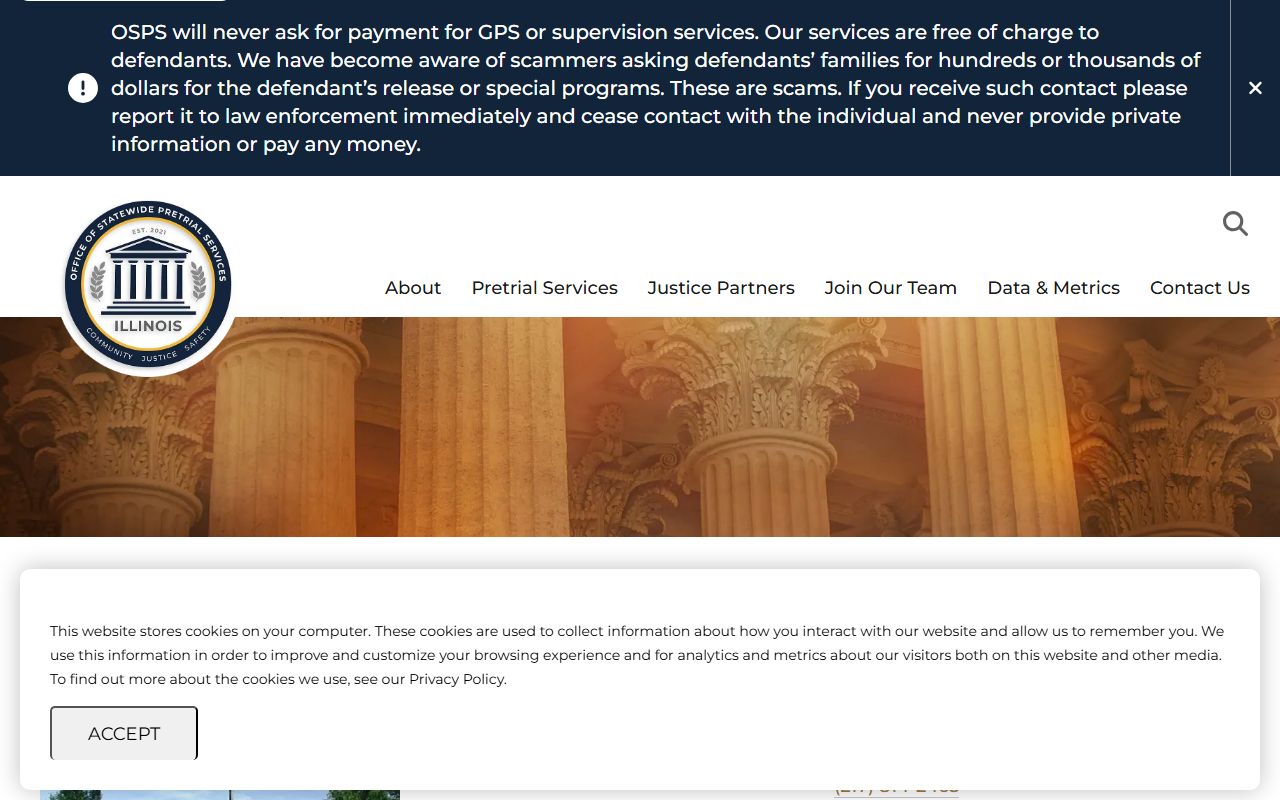
Release questions should be checked against the court order, the Circuit Clerk, the jail, or OSPS because online summaries can lag behind court action.
Warrants That Lead to an Arrest
No official Whiteside County Sheriff's Office active warrant list or separate searchable warrant portal was located in the reviewed official sources. A warrant may still appear in a court file, especially for a failure to appear, a bench warrant, a warrant recall, or a release-condition violation. If a warrant is served and the person is not released by court order or citation, the person may be booked into Whiteside County Jail.
Use official channels before relying on third-party warrant pages. The sheriff's main and non-emergency number is 815-772-4044, sheriff records is 815-772-5217, and the jail line is 815-772-5203 if the warrant has led to custody. Court records and clerk questions go to the Circuit Clerk at 815-772-5188. In-person official locations include the Sheriff's Office at 400 N Cherry St, Morrison, the courthouse at 200 E Knox St, Morrison, and the Sterling Court Building at 101 E 3rd St, Sterling. Contacting law enforcement about an active warrant can result in arrest, so legal advice may be needed before appearing in person.
Charges vs. Convictions in Court Records After Arrest
An arrest, a booking charge, and a court charge are not convictions. A conviction requires a guilty plea, finding, or verdict. Court records may show that a person was charged and that the charge was later dismissed, amended, reduced, or resolved. Illinois State Police conviction-information searches under UCIA are different from a local docket review because public ISP conviction data does not necessarily display every non-conviction court event.
| Charge | Conviction | |
|---|---|---|
| Stage | Formal accusation in a court case | Final guilty plea, finding, or verdict |
| Proof Standard | Accusation supported enough to proceed in court | Guilt established under the criminal-case standard |
| Record Meaning | Shows what was alleged and prosecuted | Shows a final criminal outcome on that count |
| Possible Outcome | Pending, amended, reduced, dismissed, or nol-prossed | Sentence, fine, supervision, custody, or other court-imposed result |
Sealed vs. Expunged Arrest Records
Illinois criminal-record clearing is governed by state law, including the Criminal Identification Act and related ISP processes. Sealing and expungement are not the same. A dismissed or eligible disposition may support a later petition, but court records do not disappear automatically just because a charge ended favorably. A court order is usually the document that directs agencies how to treat the record.
| Sealed | Expunged | |
|---|---|---|
| Public Visibility | Hidden from most public access | Destroyed or treated as though it did not exist for many purposes |
| Agency Access | Law enforcement and certain authorized entities may retain limited access | Access is much more limited and depends on the order and law |
| Typical Use | Often used for eligible records that can be removed from public view | Often associated with eligible arrests, dismissals, acquittals, or qualifying outcomes |
| Proof Needed | Court order or case details showing eligibility | Court order directing expungement |
For criminal-history review, ISP offers Access and Review for a person's own record and CHIRP for name-based conviction inquiries. For local case files, start with the Circuit Clerk or Judici and then verify what order, if any, was entered.
Background Check Considerations
Casual court-record lookup is not the same as a compliant background check. Employers, landlords, insurers, lenders, licensing bodies, and other decision-makers may have duties under federal and state law before using criminal-record information. A local court docket can be incomplete, outdated, sealed, expunged, or different from ISP conviction data.
Important: Whiteside County Inmate Population is not a consumer reporting agency and may not be used for FCRA-covered screening decisions.
Restricted Court Records After an Arrest in Whiteside County
Some records after an arrest are not fully public. Juvenile matters, sealed cases, expunged records, certain victim information, active-investigation material, and security-sensitive jail records may be withheld or redacted. Illinois FOIA, court rules, and criminal-history laws all contain exemptions or access limits. A docket entry that is visible online may not include every filing, and a file that exists at the clerk's office may still have confidential documents removed from public access.
For written public-record requests outside the court file, Whiteside County provides a Freedom of Information Act page. For criminal court files, use the Circuit Clerk rather than sending a sheriff records request. For active warrant, custody, or pretrial questions, confirm with the jail, clerk, court, or OSPS before assuming an online result is current.